

Treatment for Bruxism: What Actually Works and What to Expect
You wake up with a sore jaw. Your partner mentions they heard grinding during the night. Your dentist points out wear on your teeth that wasn’t there at your last check-up. These are the moments most people start searching for treatment for bruxism, and looking for answers that go beyond “try to stress less.”
This article covers what bruxism involves, why it’s worth treating properly, what the different treatments look like in practice, and how a dentist finds the cause and monitors it over time
What Is Bruxism and Why Does It Cause Dental Damage?
Bruxism is the involuntary clenching or grinding of teeth. Involuntary is the key word. Many people assume they should be able to stop through awareness alone. For some, daytime awareness helps. But for most people with bruxism the grinding happens during sleep, so conscious effort has limited reach.
The forces during a grinding episode can be far higher than during normal chewing. Over months and years that pressure changes the teeth. It flattens cusps, cracks enamel, fractures fillings and crowns, and loads the jaw joint. The problem isn’t just discomfort. It’s progressive structural damage that gets more complicated to fix the longer it continues.
Bruxism rarely exists in isolation. It often overlaps with jaw joint dysfunction (TMJ disorders), sleep-disordered breathing, stress, diet, and sometimes medication side effects. Working out which factors are driving your grinding is a large part of what makes a proper assessment worthwhile.

Why “Just Relax” Isn’t a Treatment Plan
Patients are often told bruxism is caused by stress and the answer is to reduce it. Stress can contribute, and managing it may help. But framing bruxism as a stress problem with a lifestyle fix misses the dental picture entirely.
Even people who successfully lower their stress can keep grinding through muscle memory and sleep-stage activation. The muscles involved, particularly the masseter and temporalis, become conditioned over years of repeated use. They don’t switch off just because a trigger is addressed.
Effective treatment works on the mechanics. It protects the teeth from damage, reduces load on the jaw joint, addresses the underlying driver where one can be found, and in some cases retrains muscle function. This is a clinical process, not a mindset shift.
Finding the Cause: Why Do You Grind?
This is the step generic advice skips. Bruxism is often a symptom, and treating it well means looking for the driver.
At First Choice Dental, the full examination looks for the signs that point to a cause. That includes checking the airway (the Mallampati score, tonsil size, and scalloping along the edges of the tongue, all of which can suggest a compromised airway), reviewing radiographic findings, and assessing the jaw muscles. Where the signs point to sleep-disordered breathing, a sleep study and an ENT referral are recommended.
This matters because grinding can be the body’s response to a breathing problem during sleep. Treating the teeth without looking at the airway can miss the real issue. Other contributing factors assessed include stress, dietary factors, and nutritional deficiencies.
How to Treat Bruxism: The Main Approaches
There is no universal answer. The right approach depends on the cause, the severity, and whether any damage has already occurred
- Occlusal Splints and Night Guards
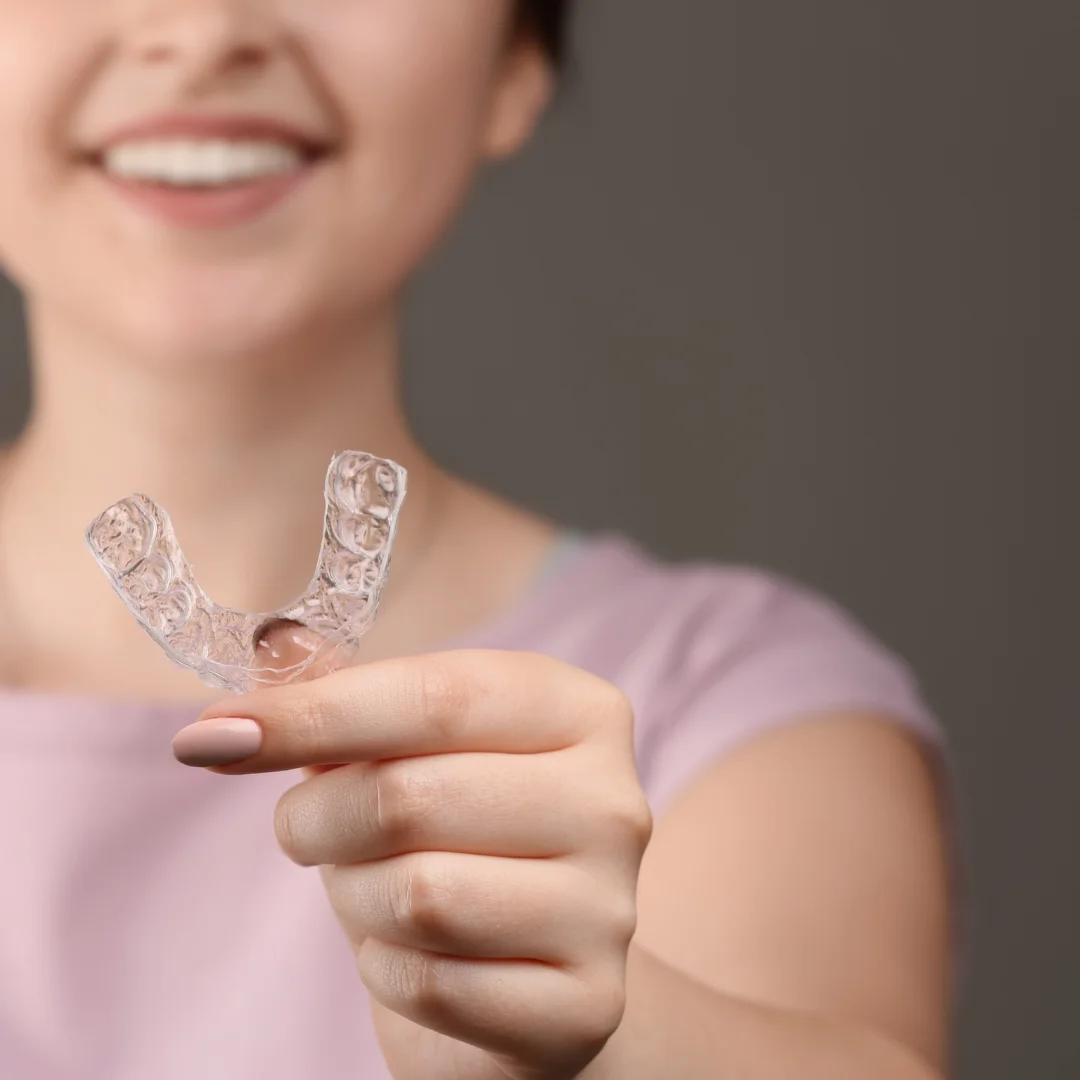
A custom-fitted occlusal splint, often called a night guard, is the most widely used treatment for bruxism and usually the first one discussed. It doesn’t stop grinding. It does two things. It spreads the forces across a wider surface so no single tooth takes the load, and it puts a barrier between the upper and lower teeth so the splint wears instead of the enamel.
Custom splints are made to your bite. They differ from over-the-counter mouthguards, which are made to a generic shape and can leave the jaw muscles working harder in some people rather than letting them relax.
There is no single splint that suits everyone. The design and material depend on the findings from your assessment and what the treatment is aiming to achieve. At First Choice Dental the splint is chosen and made for each patient after examining jaw position, wear patterns, and bite. The fit is checked and adjusted at follow-up so it works as intended.
- Bite Adjustment and Occlusal Therapy
In some patients an uneven bite contributes, where certain teeth make contact before others and create points of high pressure that the muscles respond to by grinding. Evening out those contacts can reduce the trigger.
This rarely means major work. Often it’s minor reshaping of specific tooth surfaces for more even contact, or in some cases orthodontics to move teeth into a more balanced position. It needs careful assessment first. Changing the bite without proper evaluation can create new problems.
- Bruxism and TMJ
Bruxism and temporomandibular joint (TMJ) disorders often occur together, and it isn’t always clear which came first. Grinding loads the jaw joint, which can cause inflammation, disc displacement, and chronic pain. A compromised joint can also change how the bite works in ways that promote grinding.
TMJ management means assessing the joint alongside the teeth and bite, so treatment addresses the whole picture. First Choice Dental manages most TMJ cases in-house. Degenerative joint problems are referred to the appropriate specialist.
- Masseter Muscle Injections
For some patients with pronounced masseter involvement, muscle-relaxant injections into the masseter (sometimes referred to as anti-wrinkle injections) can reduce the force of grinding by partly limiting the muscle’s contraction. The effect is temporary, usually three to four months.
This is considered only as a last resort, when other measures haven’t controlled the forces, and it is assessed individually. It doesn’t address the underlying habit, so it only ever forms part of a broader plan.
- Managing the Triggers
Depending on what the assessment finds, managing contributing factors can be part of treatment. This may include reviewing medications known to increase grinding, particularly certain antidepressants and stimulants, which the patient discusses with their prescribing doctor. It may include assessment for sleep-disordered breathing, given the documented association between bruxism and sleep apnoea. And it may include stress-related strategies as an adjunct to dental treatment, not a replacement for it.
What a Clinical Assessment for Bruxism Involves
If you see a dentist in the Macarthur region about grinding, the assessment usually involves examining the teeth for wear, checking the condition of existing dental work, assessing how the upper and lower teeth meet, checking the airway signs described above, and feeling the jaw muscles and joint for tenderness. You’ll be asked about headaches, jaw stiffness on waking, and sleep quality.
First Choice Dental uses an iTero scan to record the teeth. The scan includes a wear histogram, which gives a clear baseline so any progression is easy to identify at future visits. Study models and an OccluSense bite analysis are used where needed. Because bruxism wear is gradual, a clear baseline is what lets small changes get picked up early.
Protecting Crowns, Veneers and Implants
One part of treatment that doesn’t get mentioned enough is protecting dental work that’s already been done. Crowns, veneers, white fillings, and implant restorations are all vulnerable to grinding forces. Investing in cosmetic or restorative work without managing bruxism puts that work at real risk of fracture or early failure.
If you’ve had, or are considering, any restorative or cosmetic treatment, a bruxism assessment beforehand is worthwhile. It can guide the materials chosen and whether a protective splint should be part of the plan.
What About Cost?
Most health funds with extras cover provide a rebate toward a custom splint. The rebate varies by fund and level of cover, and often doesn’t cover the full cost. Reception can give you the item number so you can check your entitlement with your fund before you go ahead.
When Should You See a Dentist for Teeth Grinding?
Bruxism is never “too late” to treat, but there are stages where the consequences become harder to address. Worn-down teeth that have lost structure need restorative work. Fractured cusps may need crowns. Joint damage, once established, takes longer to settle than it did to develop.
Morning jaw soreness, flattened or chipped teeth, frequent headaches around the temples, or someone telling you that you grind in your sleep, are all reasons to arrange a check rather than wait. It usually doesn’t resolve on its own.
Book a Bruxism Assessment at First Choice Dental
If you’ve been wondering whether your grinding warrants a conversation with a dentist, it does. An assessment takes less time than you’d expect and gives you a clear picture of what’s happening with your teeth, jaw, and airway.
At First Choice Dental, the team assesses bruxism as part of a thorough examination, identifying wear patterns, bite issues, airway signs, and jaw joint involvement before recommending the right approach. Book your appointment today.
Frequently Asked Questions
1.Is a night guard enough on its own to treat bruxism?
A night guard protects the teeth and reduces load on the jaw joint, which matters. But it doesn’t address why the grinding is happening. For some patients it’s enough. For others, the cause needs assessing and managing. A dentist can advise based on the clinical picture.
2.How do I know if I have bruxism if I grind in my sleep?
A dentist can spot wear patterns and bite changes that indicate grinding even when you have no awareness of it. Morning jaw soreness, headaches on waking, and tooth sensitivity are also worth mentioning at your next check-up.
3.Can children have bruxism?
Yes. Grinding in children is common, particularly during certain stages of dental development. It often settles as the teeth mature. Persistent grinding warrants a review, especially where there are jaw symptoms, obvious wear, or signs the airway may be involved. The children’s dentistry team at First Choice Dental assesses this as part of a routine examination.
4.Does bruxism treatment hurt?
The assessment is non-invasive. A custom night guard is made from a scan or impressions, which is straightforward. Bite adjustment, where needed, is minor and usually doesn’t need anaesthetic. None of the standard approaches involve pain as part of the process.
5.Can bruxism cause permanent tooth damage?
Yes, over time. Enamel lost to grinding does not grow back. Significantly worn teeth may need restorative work to rebuild height and function. That’s why early management beats waiting until symptoms are pronounced.
Book an Appointment
by calling us on 02 4647 4570
Our Location
Suite 3, 20 Somerset Ave Narellan NSW 2567