

Root Canal Treatment in Narellan
If you’ve been told you need a root canal, or you’re dealing with tooth pain that won’t go away, here’s what you need to know: the procedure itself is not what hurts. The infection is what hurts. Root canal treatment is how you stop it.
At First Choice Dental, we handle most root canal treatments in a single visit. For straightforward cases, we can complete the root canal and fit a permanent crown the same day.
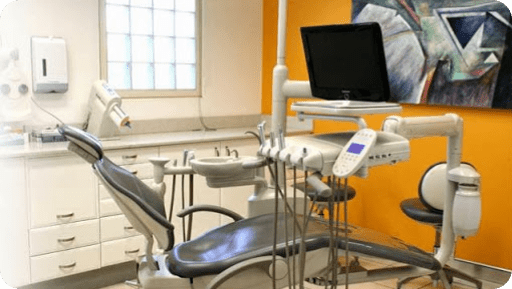
Done in-house. No referral needed
Most patients referred to a specialist are referred because their dentist doesn’t have the equipment, the training, or the time. We do.
As your local dentists in Narellan, Dr Henry Mulla has been performing root canal treatment at First Choice Dental for over 17 years. We have the technology on-site to diagnose, treat, and restore the tooth without sending you anywhere else. That means fewer appointments, faster resolution, and a single clinical team who knows your case from start to finish.
Referral to an endodontist is sometimes the right call. Unusually complex anatomy, calcified canals, or retreatment of a failed case are examples. If that applies to your case, we’ll explain why. For the vast majority of cases, we handle it here.
One visit. Not three.
The traditional approach to root canal treatment spread the work across multiple appointments. There are situations where that’s appropriate. But for most cases, it isn’t necessary.
We complete the cleaning, shaping, and sealing of the canals in a single appointment. If your tooth is suitable for a same-day crown (and many are), we can mill it here in the practice using our CEREC system and fit it before you leave.
That’s the full treatment: root canal, crown, done.
Useful Links
How we approach the treatment
3D imaging before we start
Before any treatment, we take a 3D cone beam CT scan if the clinical picture warrants it. A standard X-ray shows the tooth in two dimensions. The 3D scan shows us the full root
anatomy: the number of canals, their shape, their length, any curvature, and whether the infection has spread beyond the tooth. We start with the full picture.
Microscope magnification throughout
All root canal treatment at First Choice Dental is performed under microscope magnification. The canal system inside a tooth is narrow. Without magnification, small canals get missed. The microscope lets Dr Henry locate and instrument every canal with precision.
Rubber dam isolation
The tooth is isolated with a rubber dam throughout the procedure. This keeps the operating field sterile, prevents bacteria from the mouth re-entering the canal during treatment, and protects you from swallowing irrigants or instruments.
Ozonated water irrigation
We irrigate the canal system with ozonated water as part of our disinfection protocol. Ozone is a powerful antimicrobial agent. It reaches areas that instruments cannot, breaking down bacterial biofilm throughout the canal system.
Laser disinfection
We use a dental laser to disinfect the canal walls. Combined with ozonated water irrigation, this gives us a thorough disinfection process that goes beyond mechanical cleaning alone.
Bioceramic sealer
Once the canals are clean, we seal them with a bioceramic material. We’ve used bioceramic sealers here for over 10 years. Bioceramics are biocompatible, dimensionally stable, and bond to the canal walls. They don’t shrink on setting, which means the seal remains intact over time. This is a significant step up from traditional materials, and it’s been our standard for a long time.
What to expect
Root canal treatment is done under local anaesthetic. The tooth and surrounding area are fully numb before we start. Most patients find the procedure far more manageable than they expected.
There may be some tenderness for a few days after treatment as the area settles. This is normal and typically managed with over-the-counter pain relief. We’ll give you clear post-treatment instructions before you leave.
If there’s swelling or signs of active infection at the time of your appointment, we’ll discuss whether antibiotics are appropriate before proceeding.
A tooth worth keeping
Root canal treatment is not a last resort. It’s how you keep a tooth that would otherwise need to come out. A restored tooth that functions well, sits in the bone, and maintains the bite is almost always a better long-term outcome than extraction and replacement.
If you need an implant conversation down the track, we can have it. But the first question is always: can we save the tooth? Usually, yes.
Call us on 02 4647 4570 or book online to arrange an assessment.
Frequently Asked Questions
Is root canal treatment painful?
The procedure is done under local anaesthetic. The tooth and surrounding area are fully numb before anything starts. What most patients describe as painful is the infection itself, not the treatment. Once the nerve is removed, the source of that pain is gone. There’s often some tenderness for a few days after the appointment, but this is normal and settles with standard over-the-counter pain relief.
How many visits will I need?
Most root canal treatments at First Choice Dental are completed in a single appointment. For straightforward cases, we can complete the root canal and fit a permanent crown the same day using our CEREC system. More complex situations may require a second visit. We’ll give you a clear picture of what’s involved at your assessment.
Do you do root canals in-house or will I be referred to a specialist?
We handle the vast majority of root canal treatments here at the practice. Dr Henry Mulla has been performing endodontic treatment for over 17 years and we have the technology on-site to diagnose and treat most cases without referral. There are situations where a specialist referral is the right call. If that applies to your case, we’ll explain why.
What do you use to seal the tooth?
We use a bioceramic sealer. It’s biocompatible, bonds to the canal walls, and doesn’t shrink on setting. We’ve used bioceramics as our standard material for over 10 years. Many practices still use older materials. The quality of the seal matters for the long-term outcome, so this isn’t a detail we overlook.
How do you disinfect the root canals?
Mechanical cleaning with instruments is only part of the process. We irrigate the canal system with ozonated water, which reaches areas instruments can’t. We also use a dental laser to disinfect the canal walls. The combination gives us a thorough disinfection protocol that goes well beyond the basics.
Do you use a 3D scan?
We have cone beam CT (3D) imaging on-site. For most root canal cases, a standard X-ray gives us enough. Where the anatomy is complex, where a standard image raises questions, or where we need to assess the extent of infection accurately, we take a 3D scan. It shows us the full root structure in three dimensions, which means no surprises during treatment.
Will I need a crown after root canal treatment?
In most cases, yes. Once the nerve is removed, the tooth becomes more brittle over time. A crown protects the remaining tooth structure and restores full function. For back teeth that take the bulk of chewing load, a crown is almost always recommended. For some front teeth, a large filling may be sufficient. We’ll discuss what’s appropriate for your specific tooth.
What happens if I don't treat it?
Dental infections don’t resolve on their own. The infection will continue to spread through the surrounding bone and tissue. In some cases it becomes an acute emergency. In others, the tooth eventually becomes unsaveable and extraction is the only option. Treating early preserves more of the tooth structure and gives the best long-term result.
Can a root-canal treated tooth last a lifetime?
With a well-sealed root canal, a properly fitted crown, and regular maintenance, it can. The tooth no longer has a nerve supply, but it remains anchored in the bone and functions normally. Many root-canal treated teeth last decades. The variables that matter most are the quality of the original treatment and how well the tooth is protected afterward.
Book an Appointment
by calling us on 02 4647 4570
Our Location
Suite 3, 20 Somerset Ave Narellan NSW 2567